What AI-Native Means for a Golf Course
AI is only as useful as the data behind it. Here's how Ace answers questions from your live tee sheet, sales and reports.
Trutee Team4 min read
Most golf software becomes "AI-powered" the day a chat box shows up in the corner. The chat box isn't the hard part. The hard part is what it can see.
If your tee sheet, point of sale and reports live in different systems, an assistant can only guess. Every real question starts with an export.
Answers need connected data
In Trutee, a tee time, the golfers in it, what they bought at the counter and the report that sums up the day all live in one system. That's what makes an assistant useful: it reads the same records your staff work from.
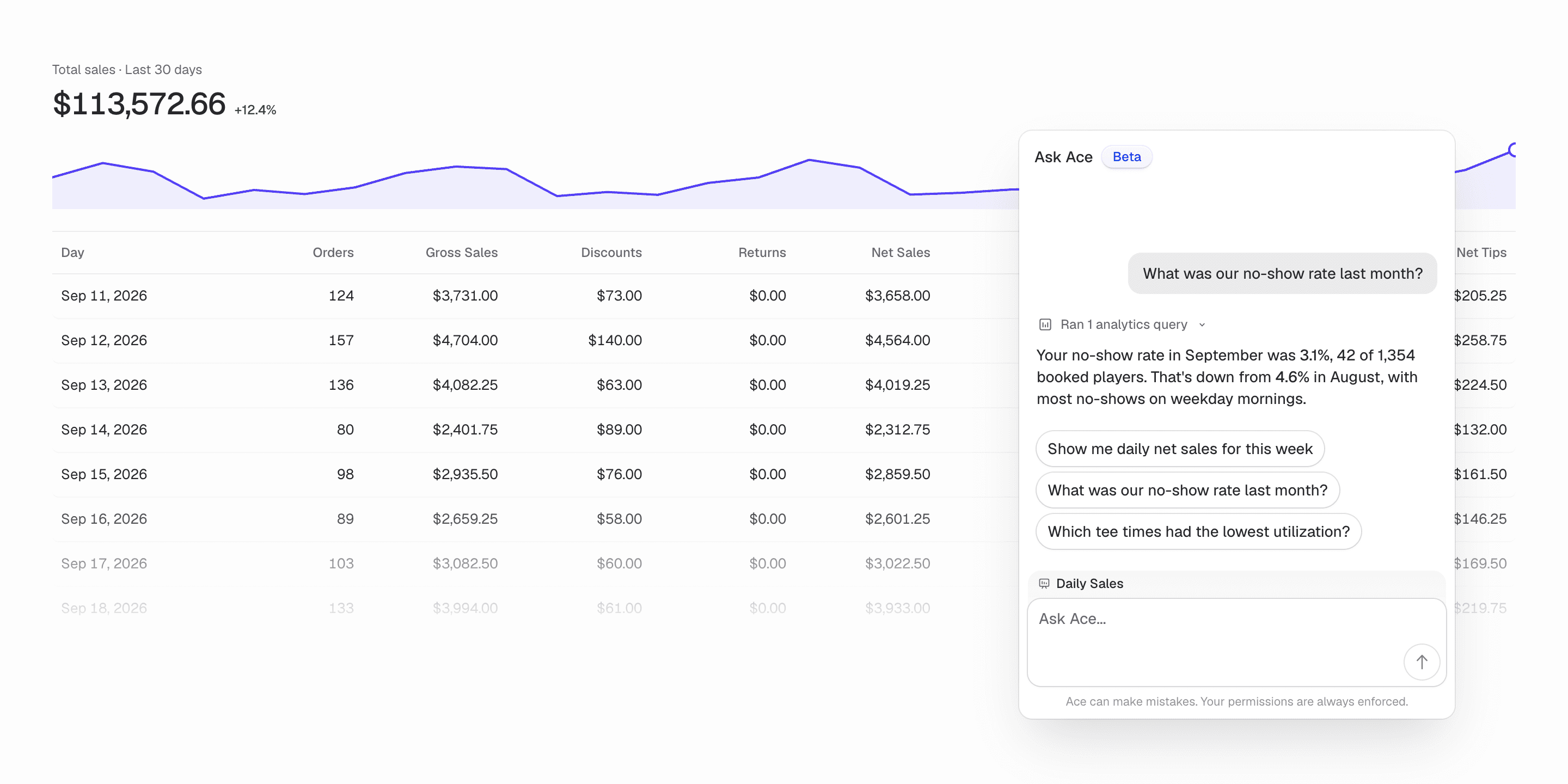
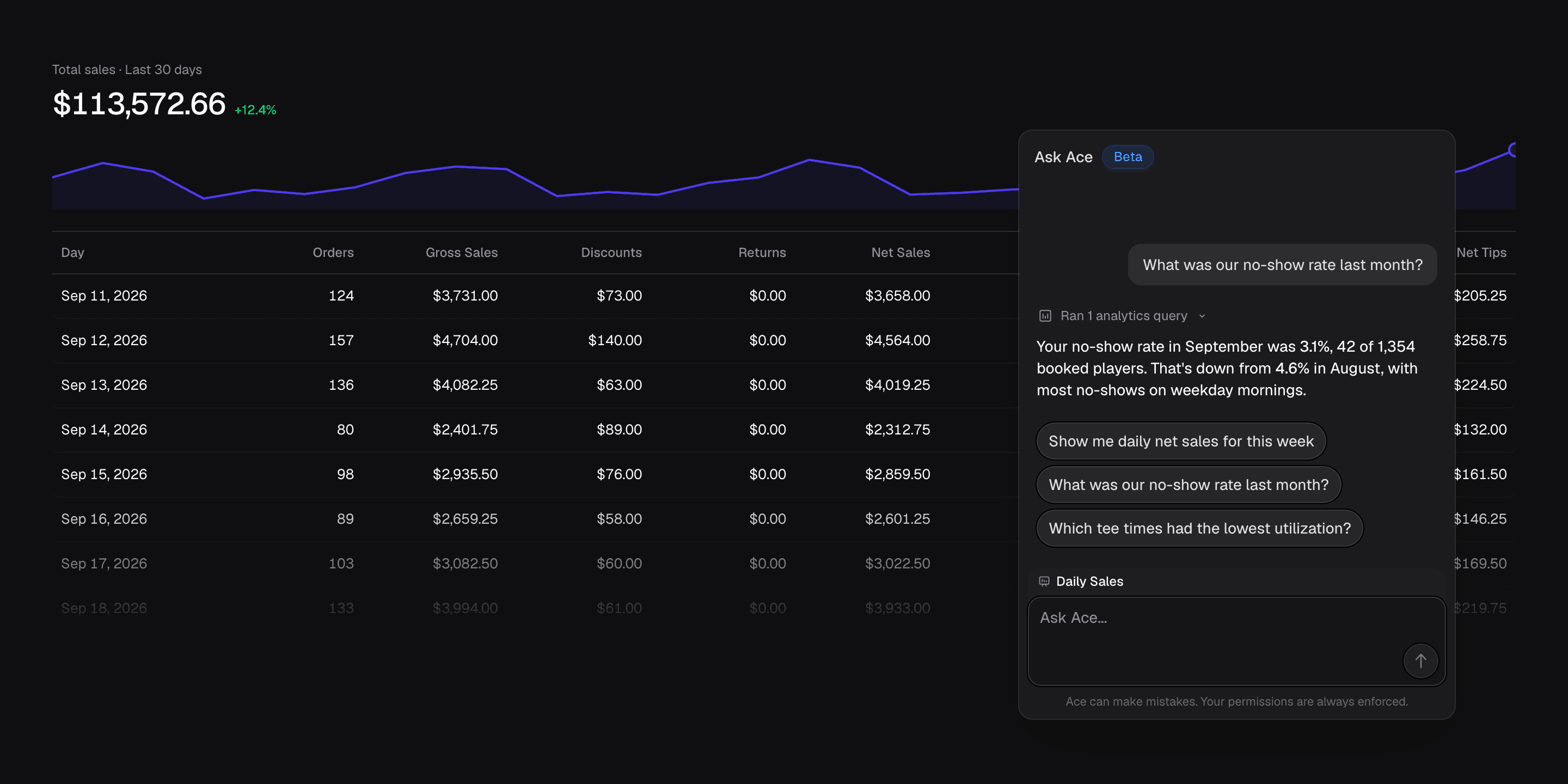
We call that assistant Ace. It's in beta, and it's built to answer the questions operators already ask.
What Ace can answer today
Ace works from your live data and Trutee's built-in reports:
- Bookings: total bookings, party size, cancellation rate and booking lead time
- Golfers: new versus returning customers and your top customers
- Operations: no-show rate and tee sheet utilization
- Revenue: revenue, average transaction value and top products
- Reports: it can run reports like daily sales, refunds, payouts and outstanding gift card balances
When Ace runs a report, it links to it. You can open the full report and check the numbers yourself.
You stay in control
Ace can do a few things beyond answering questions, like blocking off tee times or setting up an event. Those actions can require an admin's approval first.
It won't change your prices, move booked tee times or send emails to golfers. Analysis and action are different jobs, and your team decides when to act.
The test is simple
AI features will keep changing. Models get better and interfaces evolve. What lasts is the data underneath.
For a course, the test is whether you understand your day sooner, with less copying numbers between systems, while your team stays in charge.